Chinese Cheese

I am a devotee of google. Gone are the days of being on a first name basis with my library team and having ‘my spot’ to sit & bury my nerdy head in Asterix books. All hail solo OCD information gathering pursuits! Besides, I can’t find any library books or written material about Chinese cheese. Many a cheese book largely ignores China, dismissing this HUGE population as lactose intolerant cheese surrender monkeys that don’t like the smell of cheese. That & it’s highly unlikely I’ll get to visit China anytime soon, reckon they can (and will) visit me instead. Guess I could pay for the trip smuggling infant milk formula in there to trade for traditional Chinese cheese? I’d love a Chinese cheese mule. This is both another contribution in English to setting the Chinese cheese record straight, and a scrapbook of my Chinese itchy travel feet using my google skills as my guide. :-)
The internets say…

Cheeses made in northern China generally have a heavy, rich flavor, where those from the south are milker and have some similarities with Italian cheeses.

In the old Chinese days, cheese was associated with barbarian cultures so it was avoided.

Chinese tend to avoid uncooked foods, so alot of traditional Chinese cheeses are eaten cooked.

LE FROMAGER de PEKIN -The Cheese Maker of Beijing – gets a notable mention here as a new world cheesemaker. This is about the traditional old world Chinese cheeses that have been made & enjoyed by the Chinese since ages ago…

The cheeses…

Ru shan – The Mozzarella of the East

A cow milk cheese made in the grasslands of Yunnan by the Bai people. Ru shan means milk fan, referring to the shape of a fan. It is eaten either raw with sugar or  grilled or deep-fried.  To make it, fresh cow milk is warmed in a wok, then the curdling agent suan jiang is added. The curds are then removed, worked with the fingers and finally stretched over a bamboo frame to dry. See the video below to see it being made!

=========================================================

Imperial Court Cheese

A pudding served in a bowl made from cow milk & rice wine, it’s reported to have a balanced, sweet & sour taste. Is sometimes topped with raisins and melon seeds.

There was no herding in the plains around Beijing, so starting in the Yuan Dynasty (1279-1368) Mongol emperors in Beijing introduced cheese from Mongolia. During the Qing Dynasty (1644-1911), imperial chefs changed the recipe by adding wine made from glutinous rice to cows’ milk. The milk is mixed with wine, baked in an oven and cooled until it curdles.

=========================================================

Daliang Buffalo Cheese

The cheese’s origins date back to the Ming Dynasty (1368-1644), when an Italian missionary who could not bear to see people throwing away extra buffalo milk showed locals how to make Italian cheese. The Chinese later adapted the recipe, adding white vinegar. To make Daliang buffalo cheese - maintain milk temperature, pour 1/3 cup white vinegar in a cup with a spoon, scoop a spoonful of heated milk into the cup, the milk immediately solidifies into lumps, mold and smooth curd with your fingers, squeeze out whey and residual vinegar,  soak in brine for 4 hours. The mild, sweet-and-salty cheese comes in thin, round flakes that are sold in a jar. WATCH Daliang buffalo cheese being made below!

=========================================================

Xinjiang Milk Knot

Made using cow or goat milk that is fermented, boiled and dried, Xinjiang milk knot’s are a dry cheese with a rough skin. Seems the more it’s chewed, the more sweet and sour flavours it releases.  The sweet type contains more fat and is more fragrant, the sour type is made with less fat & is less aromatic. The Kazkh nomadswho make it usually soak their milk knots in hot tea to soften it before eating, or chew it slowly. Less authentic milk knots are available in Shanghai, as pictured below.

=========================================================

Milk Tofu

Raw cow milk, usually colostrum, is coagulated, fermented and formed into blocks. A chese from Inner Mongolia, it is often steamed or grilled, soaked  in tea, and served with fried millet and braised mutton. Mongolians say it’s flavor and texture changes when it is cut into different sizes; thick slices are soft, milky, slightly sweet and sour; thin slices taste sweeter and melt in the mouth. Some make with ​​caramelised milk.

Posted in Uncategorized | 1 Comment

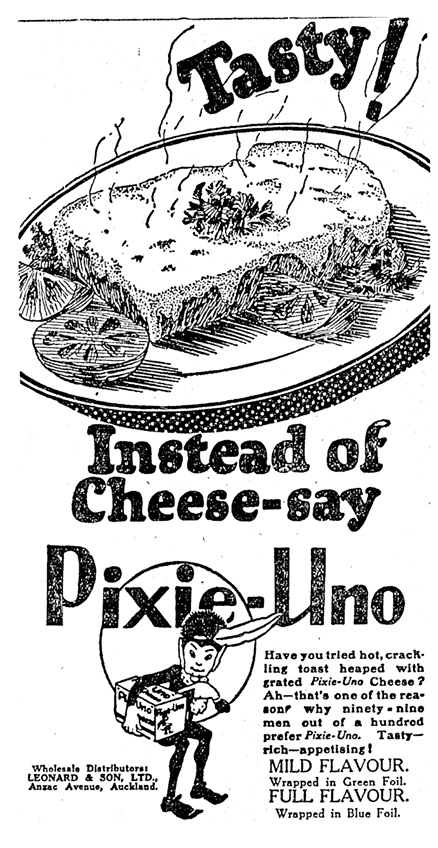
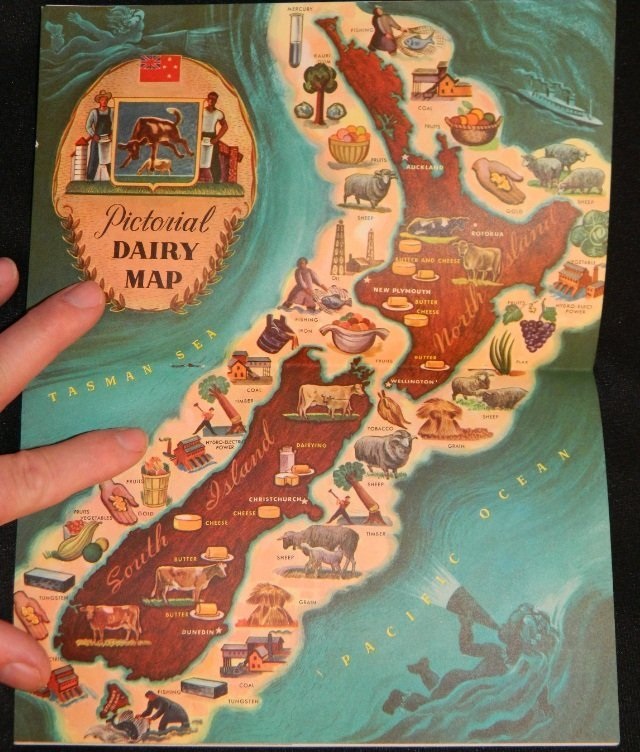
New Zealand Dairy in the Curd Old Days

I love to collect, always have. In my case it’s less the object and more the data, my house & budget too small to procure & store an archive of items. I guess this is why my collections are modest, mostly a city of smurfs, over 1000 fromage etiquettes & NZ dairy treasure: milk bottles, cheddar crates, cheese tins, milking cups, vintage cheddar hoops, butter pats…

I’m not alone, there is quite the community of dairy antique geeks, but not so many vocal dairy collectors in NZ that I’m aware of(?), although  I’m confident they’re out there across NZ & we’re yet to cross paths. We’ve alot to swap notes on, NZ’s dairy history was and continues to be a big deal – without the industry what would identity of Noo Zeeland be? It’s with relief this is acknowledged by the NZ National Dairy Museum. We’ve a fair bit of dairy heritage archived in museums & libraries across the country, which I’ve managed to kinda curate in my own way, via my New Zealand Dairy in the Curd Old Days pinterest page. I’s like to see more permanent dairy exhibits in NZ, but then a geek like me would aye.

Here are some of my favourites…

Nellie with Clover the cow, circa 1890

1901

Pihama Dairy Factory 1919 – 1920

The ’1 ton cheese’ made for the Dunedin and South Seas Exhibition in 1925-26.

HELLO NEW ZEALAND “A STORY OF DAIRYING IN NEW ZEALAND.” 1944 ~ NATIONAL DAIRY COUNCIL

Dairy factory workers loading cheeses on to the high shelves in the store room. Each cheese weighed more than 80 lbs. – East Tamaki cheese factory, ca 1955.

At Wright Stephnson’s department storee cutting a 500 lb cheese made by the Rennet Cheese Company, Eltham, circa 1968

Posted in Uncategorized | 2 Comments

Wietkaas – The Cannabis Cheese

Unlike the hemp cheeses on the market, Wietkaas is very much a psychoactive cheese. Far from being passe, it is a traditional Dutch delicacy where visitors have a chance to experience Holland in one bite. Each raw milk 500gm cheese contains 5 grams of marijuana and is therefore legal within the Dutch borders.

Caution! Wietkaas contains drugs.

Be careful with consuming our cheese. Please do not eat too much at once, and eat it only at special occasions. Ask for help if your consumption becomes fanatic.

Eating a Wietkaas is not the same as smoking a joint. Wietkaas takes much longer for the effect to come, maybe even more than an hour, that varies by person, but it’s effects are way harder.

When smoking a joint, 80% of the THC (the active ingredient) gets lost, when eating our cheese, every bit of THC is absorbed by the body. Too much cheese may cause a tedious trip, and that is not our intention.

Posted in Uncategorized | 1 Comment

Tiny cheese foodies

I found a bunch of Tiny Foodies today that got me excited. The AU PAYS DU LAIT Balade des Minimiams exhibition at La Milk Factory created by husband and wife team Akiko Ida & Pierre Javelle. If you’re reading this, chances are tiny folks living on cheese turns you on, too. I mean, who doesn’t love a cheesy choo choo train?! *Smooch* ♥

Posted in Uncategorized | Leave a comment

Mile High Cheese Club

I’ve been researching what cheese plates are available to folks travelling at 30,000 feet.

I’ve only ever flown first class once, in a private jet from Oxford UK to the Salon del Gusto. Believe it or not, it was a trip in the company jet to source new cheeses for my then employer Daylesford Organic. This little chesdale boy from Noo Zeeland could not believe his luck. The plane even had a butler. No shit. Spent the arvo having beers & trying to get cheesemaker James McCall to taste all the freaky slow food presidia cheeses, with Graukase and Cheese In A Sack personal faves. Returned to London in the eve with crazy cheese and tall tales - this in flight cheese plate was epic.

Now I’m prob never gonna fly first class again, I know my station in life. Which is a pity, cause the cool cheeses sadly are not ‘really’ offered in cattle class. Still, many airlines appear to be offering their passengers a choice of cheese with staff cutting to order in front of them, while some airlines continue with bulk ultrasonic sliced packaged product – those ultrasonic slicers are hypnotic.

Almost every airline cheese plate has grapes on it. WTF? They are the fruity crutch. Let the cheese walk!

I reckon Lufthansa, Emirates, Thai Airways, British Airways & Swiss International Air have good cheese plates, but I’m most curious about the plates offered by Asiana & Japan Airlines.  I’ve found my airline cheese plate googling results pretty fascinating, and predictably got carried away collecting and posting them on my pinterest here: Airline Cheese Plates.

30 cheeses are selected by the British Airways ‘cheese master’ then four make it past the British Airways panel to get on the plane:

Posted in Uncategorized | 5 Comments

From Hokkaidō with cheese.

‘Remember – avoid the meadow’

My kindly mule delivered cheeses from Hokkaidō for me. I’m fascinated with Japanese cheese culture, and this was my first experience tasting Japanese cheeses. They tasted nothing like the cheese aliens that terrorize people in Japanese commercials, or fondue doritos, although I’ve not sampled their canned camembert yet. I have time, it has a shelf life until 2025. My Mule said most artisanal Japanese cheeses are sold in souvenir stores, while their cheese shops retail the imported stuff. Sounds familiar aye NZ.

Above (left to right) A potent little cheese from Handa Farm, Okoppe Daichi (おこっぺ大地), a mild washed rind made by Tomita Farm Cheese Factory, and a very ripe brie from Tokachino Fromage, a fun cheese board indeed.

Above: My batch of Japanese miso camembert was pretty funky – ie. not flash – and has now transcended into a magic potion. Fortunately the Yutaka’s Wa Cheese, with mountain wasabi flavouring was awesome. It’s from a town called Ikeda in Tokachi, it looks super processed and tasted great.

Above: Cool packaging & cute little (tomato shown for scale) 9ogm raw milk ‘white blue’ cheese (ホワイトブルーチーズ生タイプ) by Toit Vert, reminded me of a really ripe Tunworth.

All above cheeses were consumed over a month – I have a 5 month girl old to parent! At time of writing this, I’m tasting the below Japanese raclette, and it’s fucking awesome. Which is a relief, it’s called Tom Handa (トムハンダ), a semi-hard cheese that won the special award at the all Japan Natural Cheese Contest. Respect Japan, well played!

Very keen to watch the above cream cheese, camembert, blue cheese & mozzarella challenge in Japan’s @ironchef_Staff kitchen stadium.

Posted in Uncategorized | 2 Comments

Cheeses from Middle-earth

‘So do I,’ said Gandalf, ‘and so do all who live to see such times. But that is not for them to decide. All we have to decide is what to do with the cheese that is given us.”

We’ve ALOT of sheep in the shire. Up until now the market has supported a meat and wool only business model for generations of sheep farmers. Chance for a fellowship to milk more middle-earth sheep and make a true NZ mountain cheese for export?!

Presently, most NZ cheese consumed overseas is made with cows milk, its country of origin not required to be labelled so the consumer understands this at point of sale. For example, the UK’s @PilgrimsChoice select cheeses from New Zealand for their brand according to this blog by @lovefood.  There are some brands however that are sold as proudly NZ products, and although not available in New Zealand in this format, they all share similar marketing content about what makes them New Zealandy:

Then Edun throws me a cheese curve ball. Produced and marketed in America as a ‘New Zealand style raw milk, raw cream, vegetable rennet cheddar.’ WTF. The kiwi history books testify to this style yet like many cheese styles worldwide, it has migrated and survives in the land of the free. With raw milk cheese permitted under the articles in NZ, time to bring back expat NZ cheeses.

If you see New Zealand cheese in your country, send me details to add to list! #CheeseSolidarity

Posted in Uncategorized | Leave a comment